04 Editorial
Design
A Rubbish Issue: The True Cost of Fly-Tipping
This editorial spread uses the physical process of scanning litter to reflect the real-world experience of navigating a trash-filled urban space.
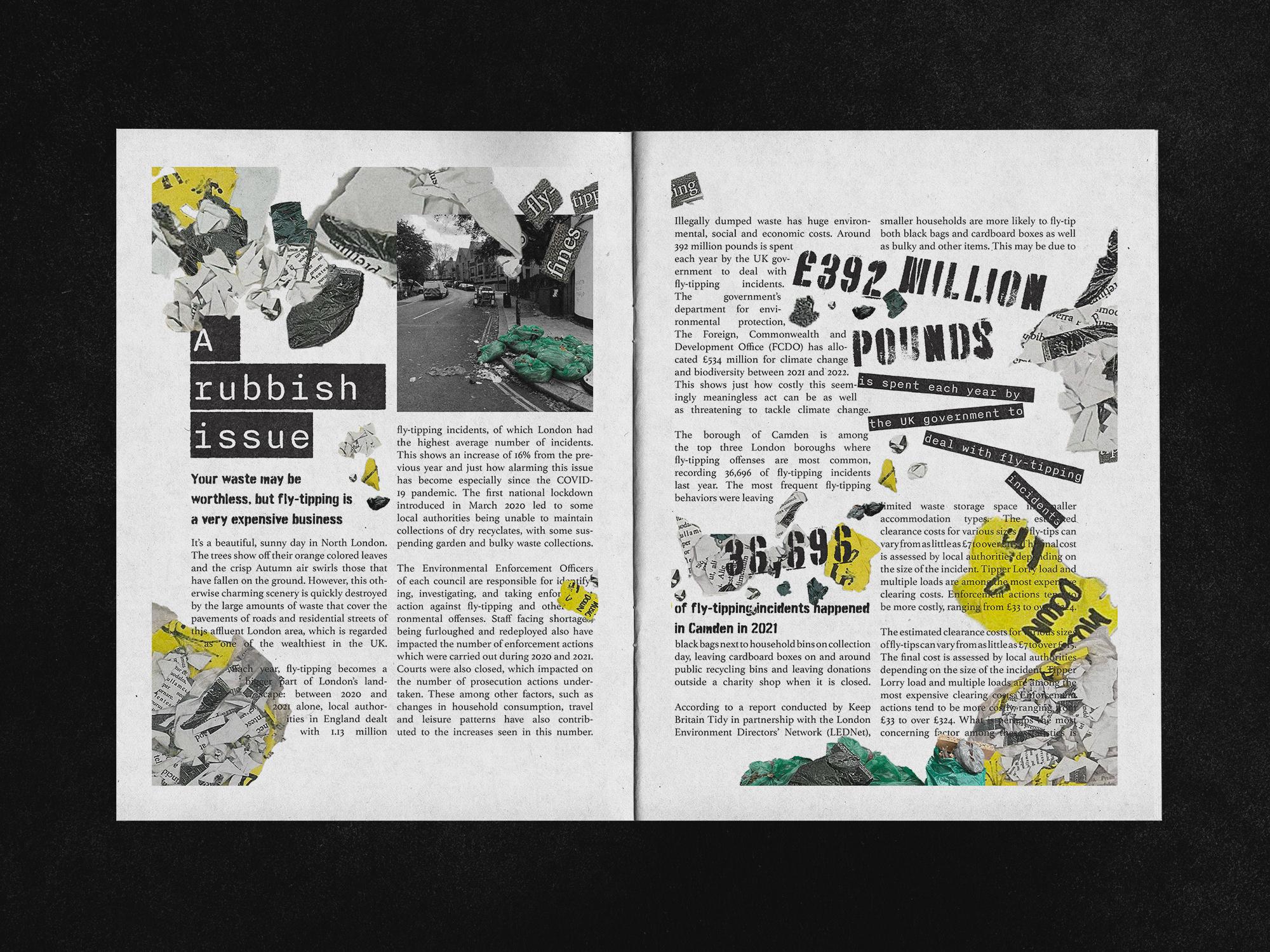
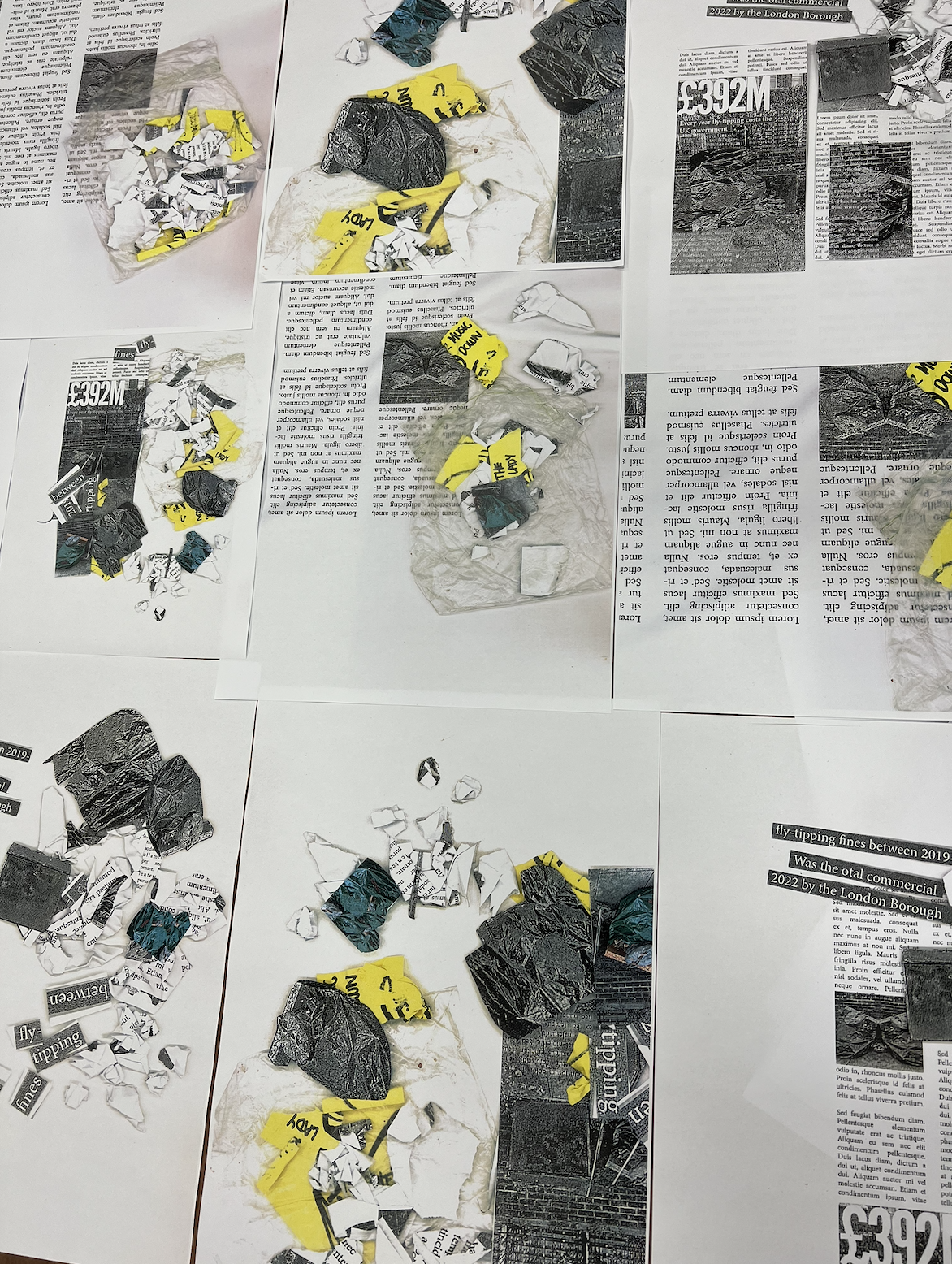
The visual approach embraces disorder. Real discarded paper was torn, scattered, and scanned to replicate how trash actually falls, rather than reconstructing it digitally.
Clearing fly-tipped waste costs the UK government millions each year. By design, the reading experience mirrors a littered city: the text is made slightly difficult to read, just as rubbish obstructs pavements and public spaces.
Process
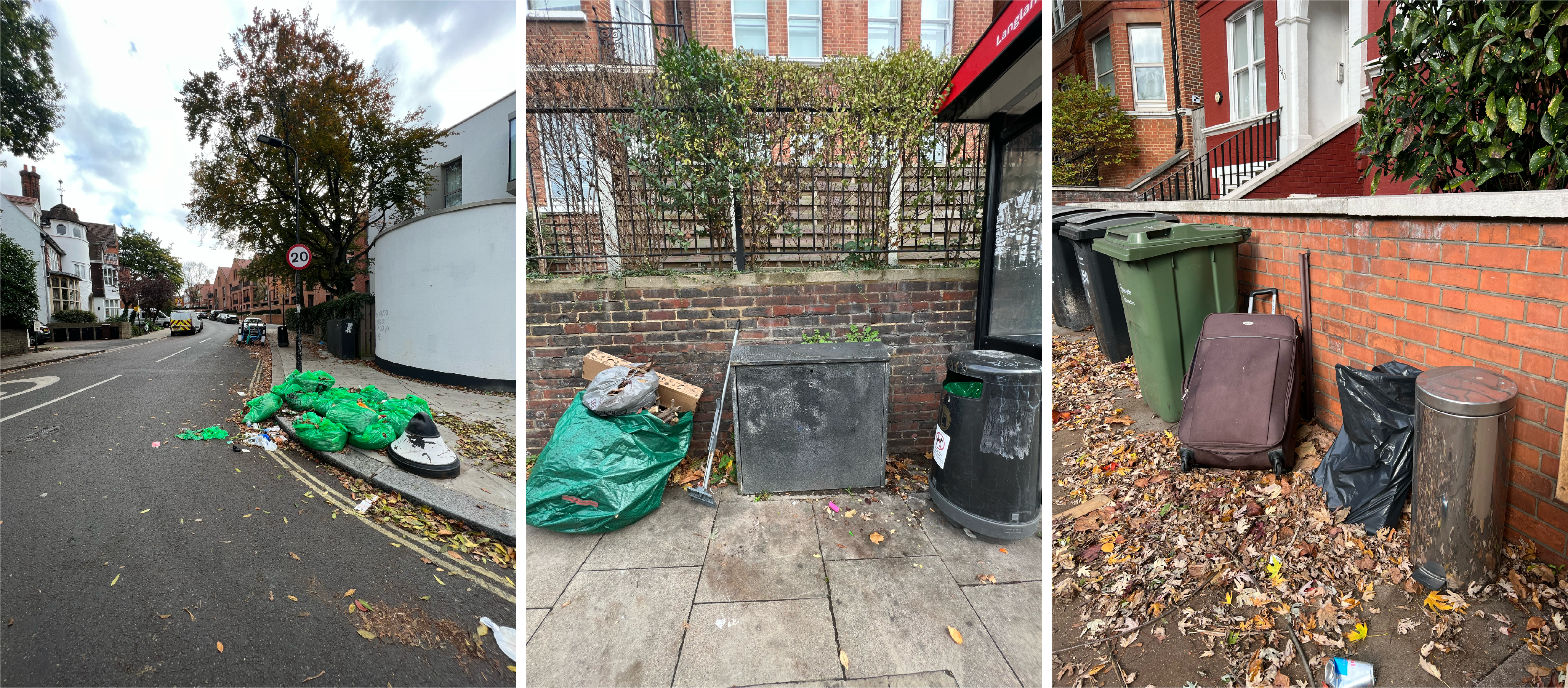
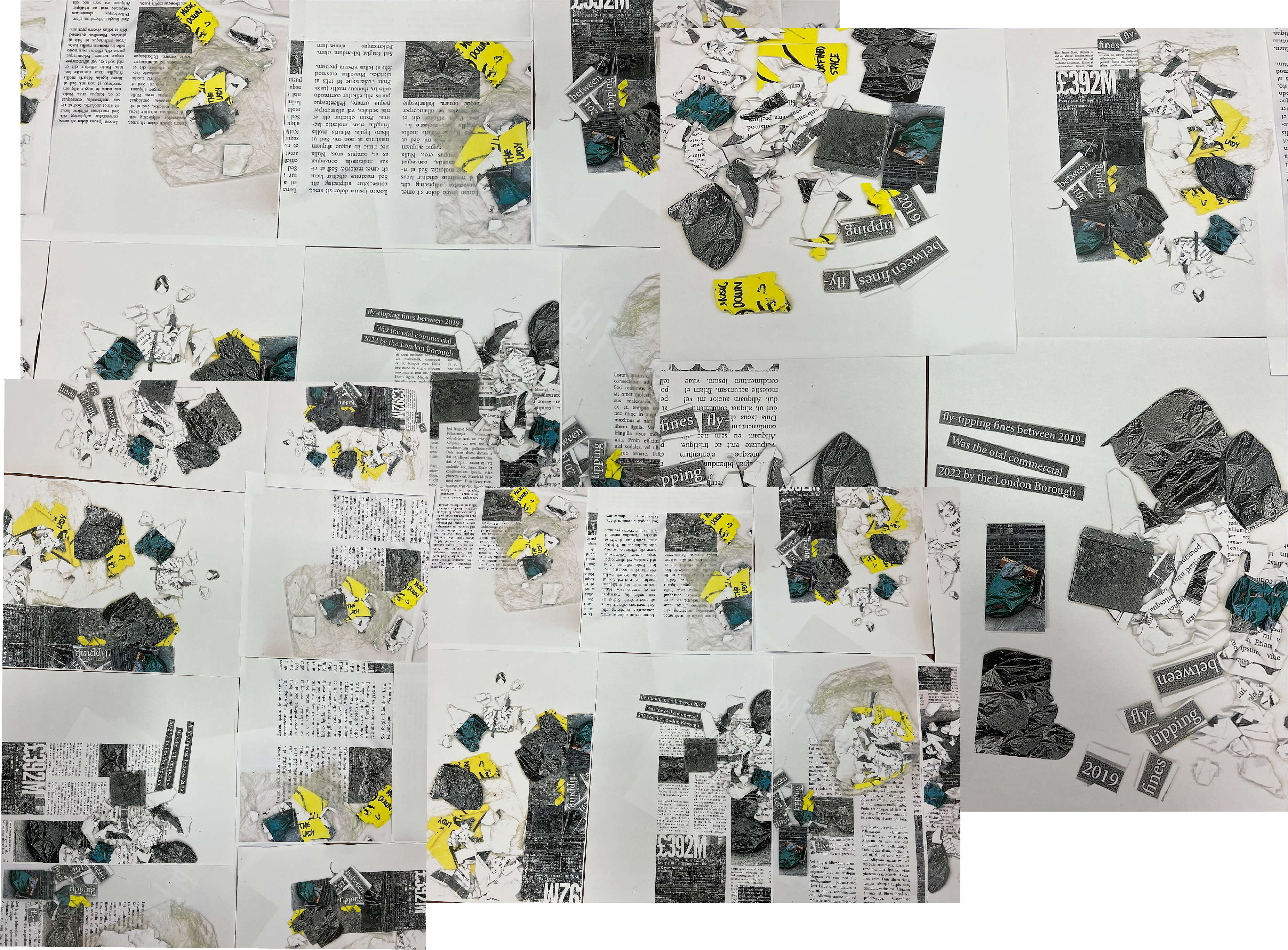
The process involved dozens of analogue tests. Crumpled scraps were scanned, cut, photocopied, and layered into organic chaos. The colour palette comes from the streets themselves: black bin bags, green waste, yellow hazard signage. The result obstructs as much as it observes; the viewer has to reckon with the sheer presence of waste.
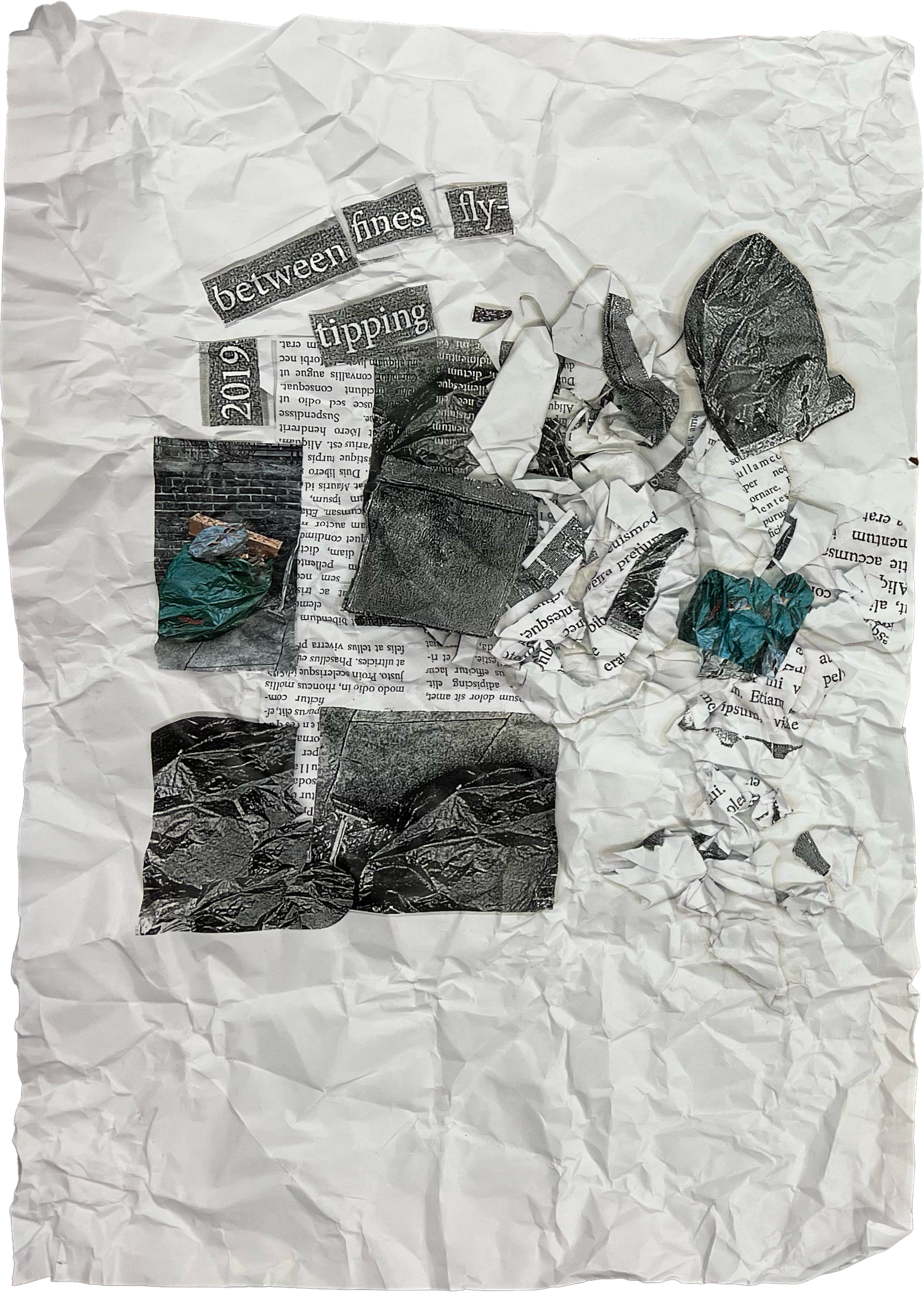
The piece plays with legibility and obstruction. Sections of text are deliberately harder to read, so the viewer navigates the page as they would a littered street: stepping over, scanning for clarity, piecing information together. The scattered, torn typography accumulates the way waste does, a textural, almost intrusive presence in the layout.