A reimagined identity for an advertising agency. The rebrand used a handcrafted approach to create a bold, distinctive presence for the brand.
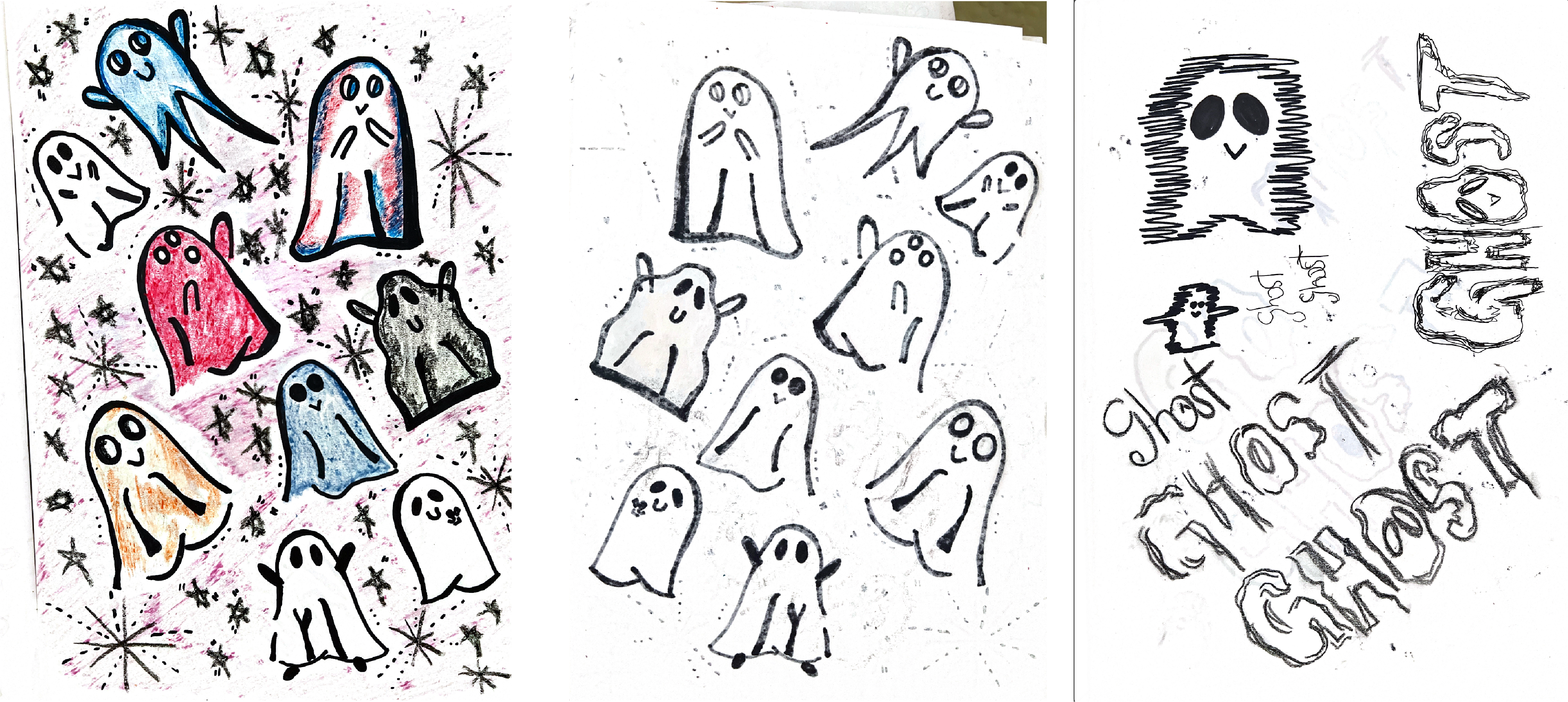
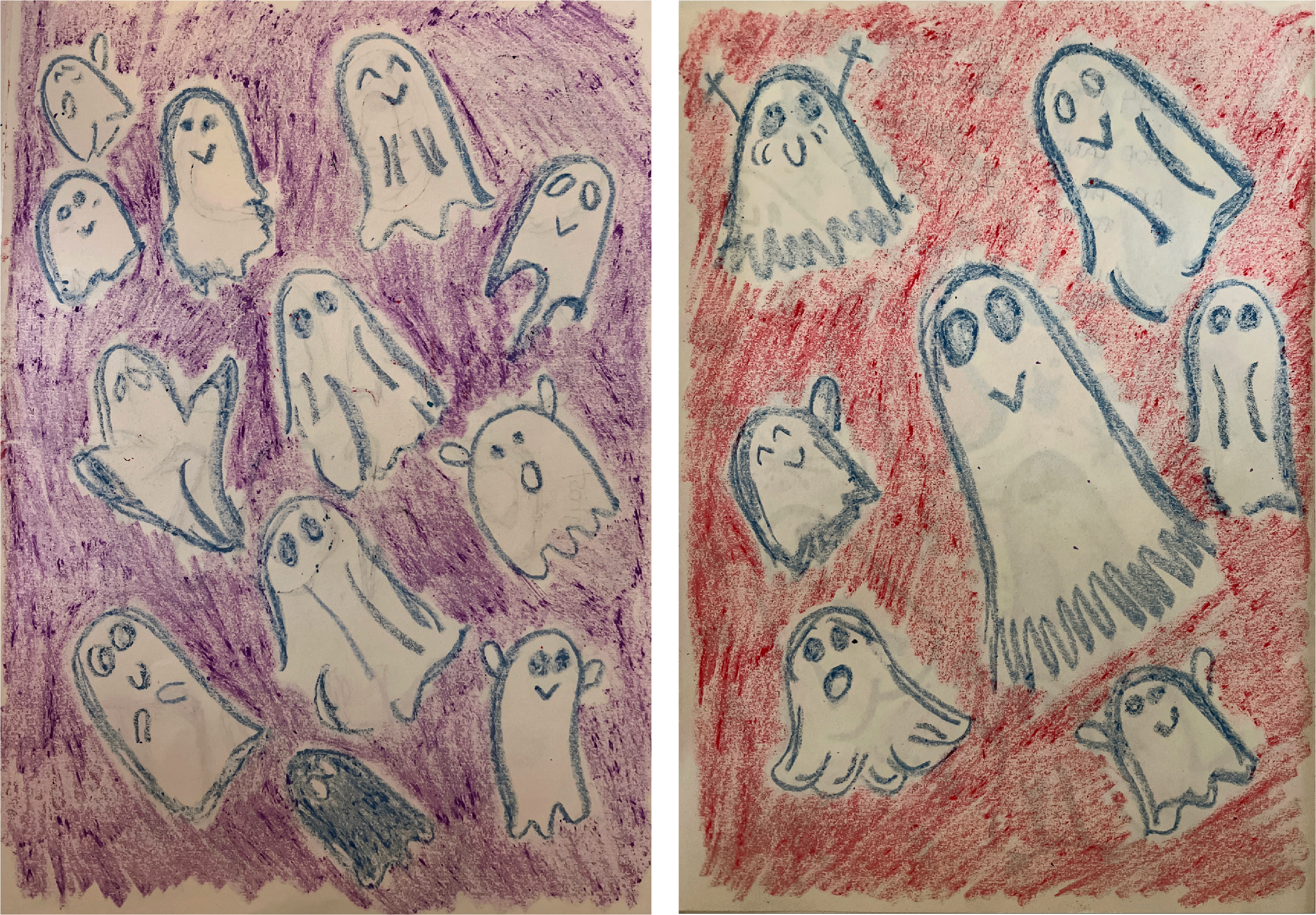
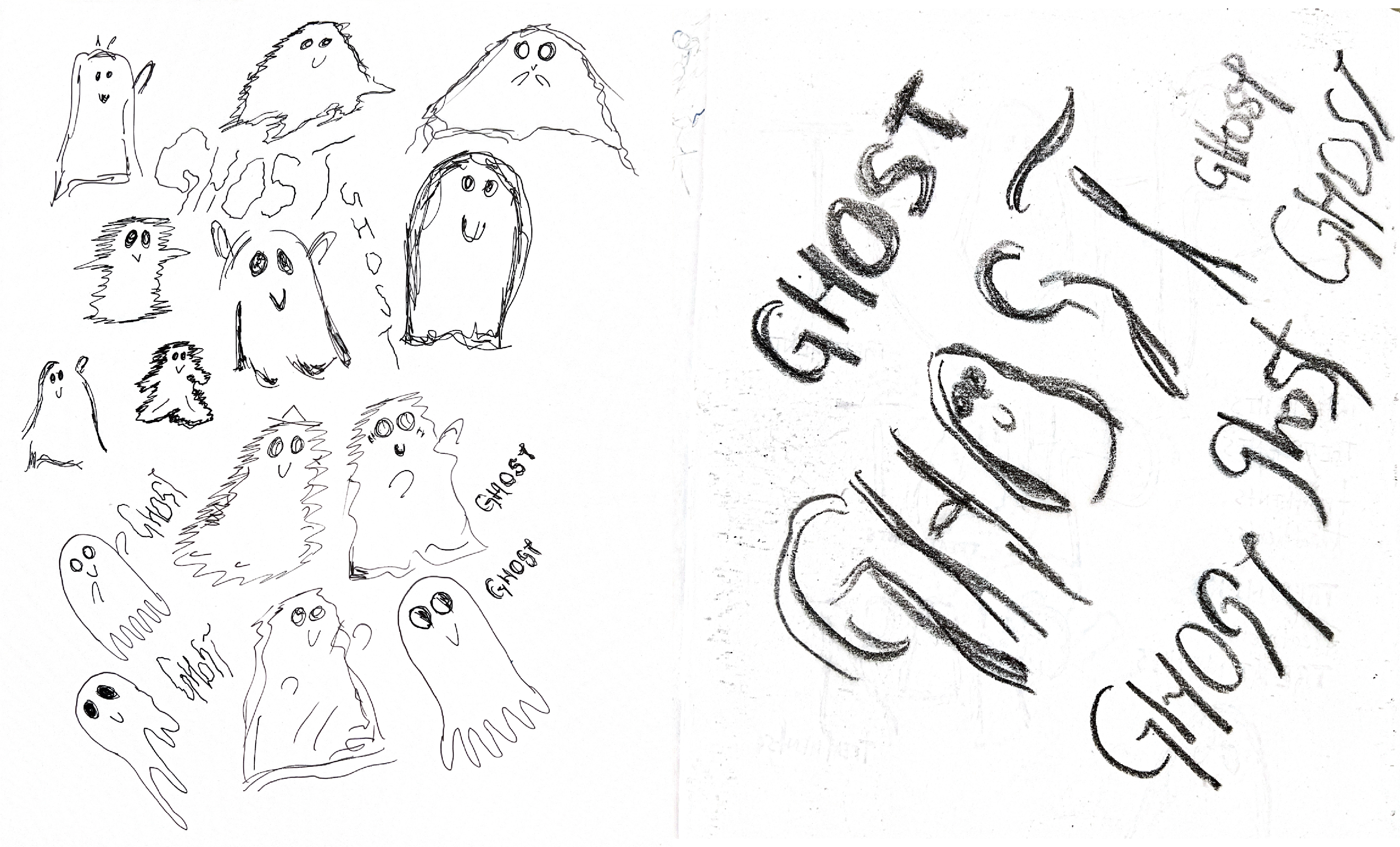
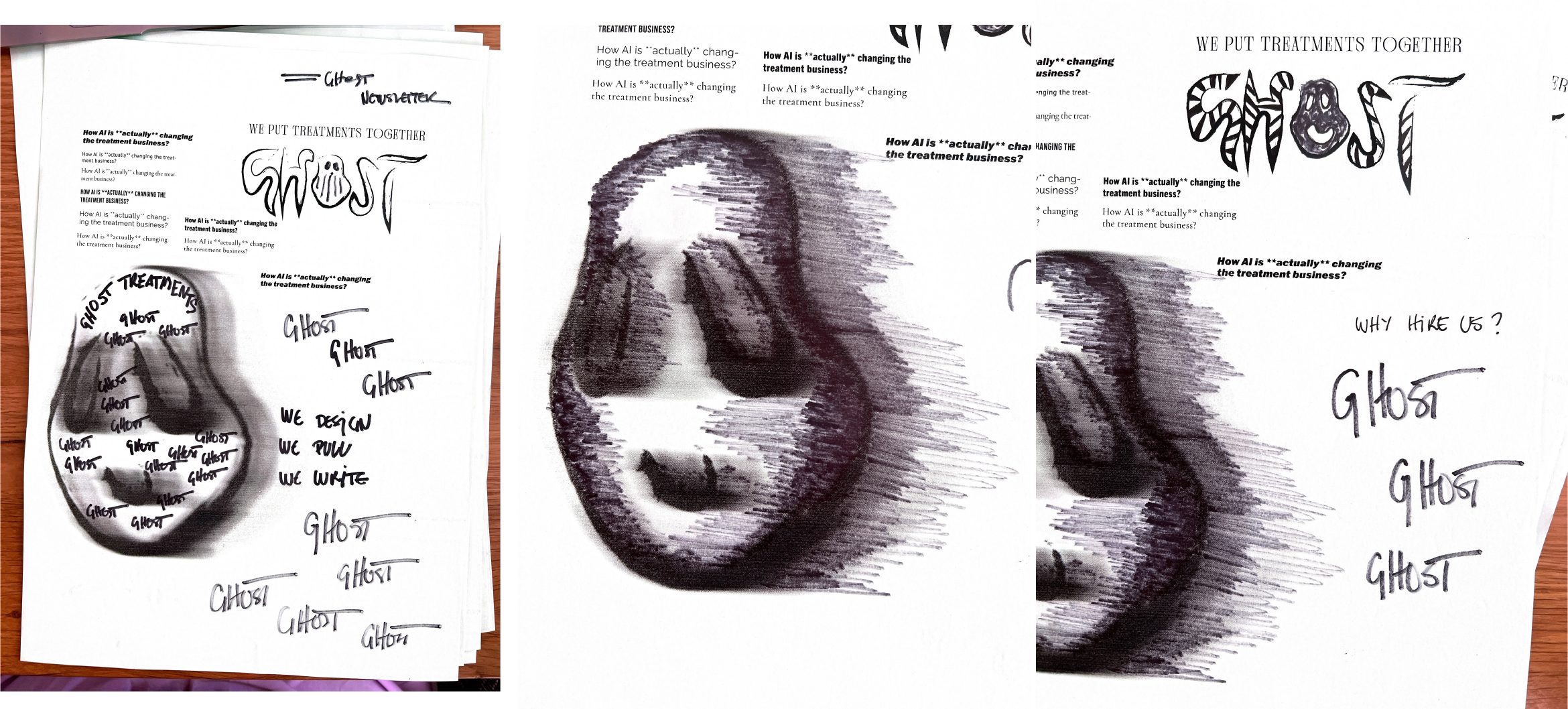
The Ghost identity began with hand-drawn sketches exploring different ghostly characters and type treatments. These early drawings capture the spirit of spontaneity and experimentation that defines the brand. By keeping the sketches raw and varied — from playful figures to darker, more abstract interpretations — we laid the foundation for a logo system that balances personality with adaptability.
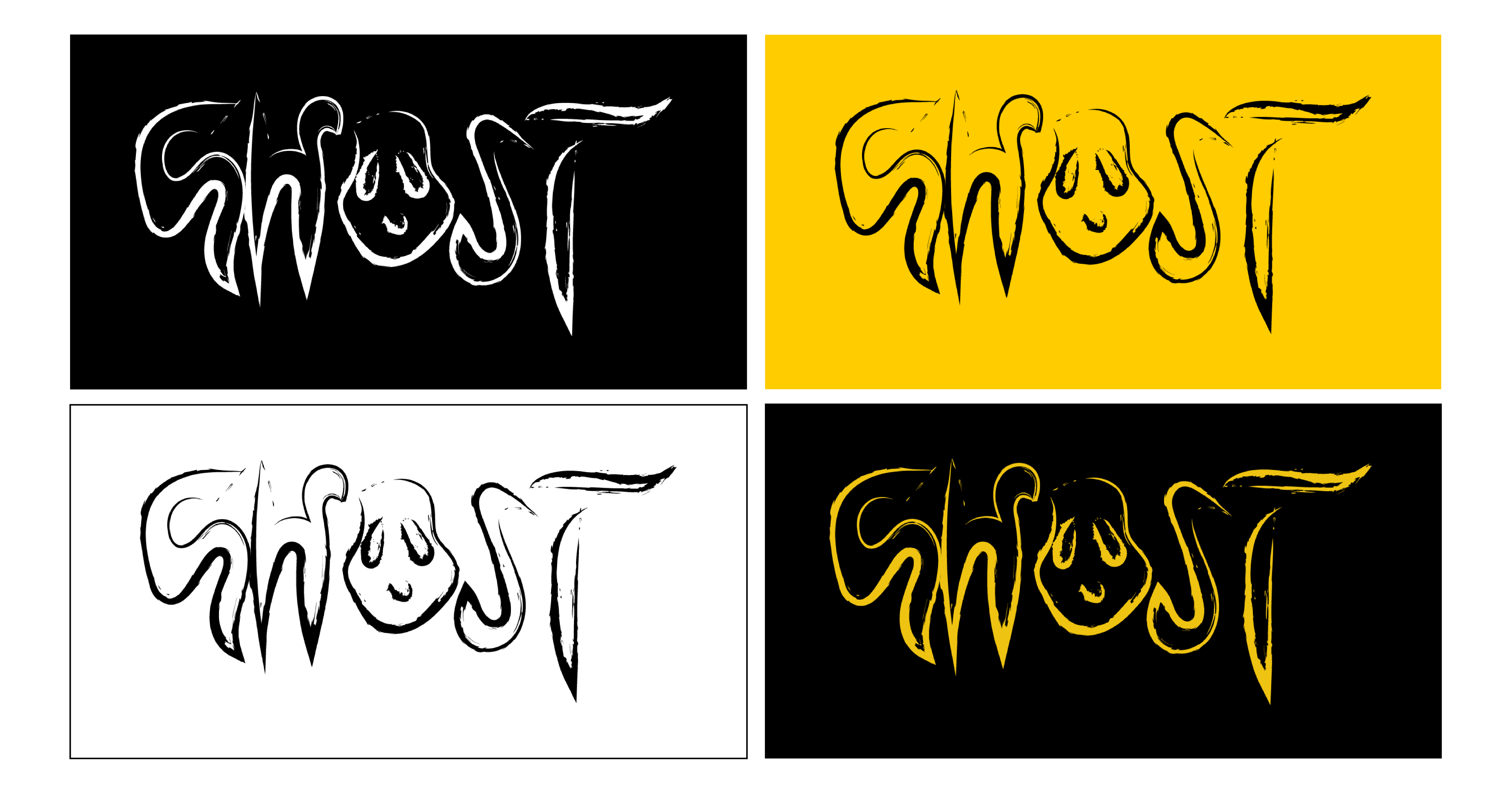
The finalized Ghost logo was distilled into a sharp yet organic wordmark. Its irregular lines suggest movement and imperfection, evoking the human hand behind the design. To ensure consistent use, the brand system includes primary and secondary logos, stacked and monogram versions, and clear spacing rules. Black, white, and yellow provide a flexible palette for different contexts while maintaining strong visual recognition. These guidelines anchor the brand in clarity without erasing its raw energy.
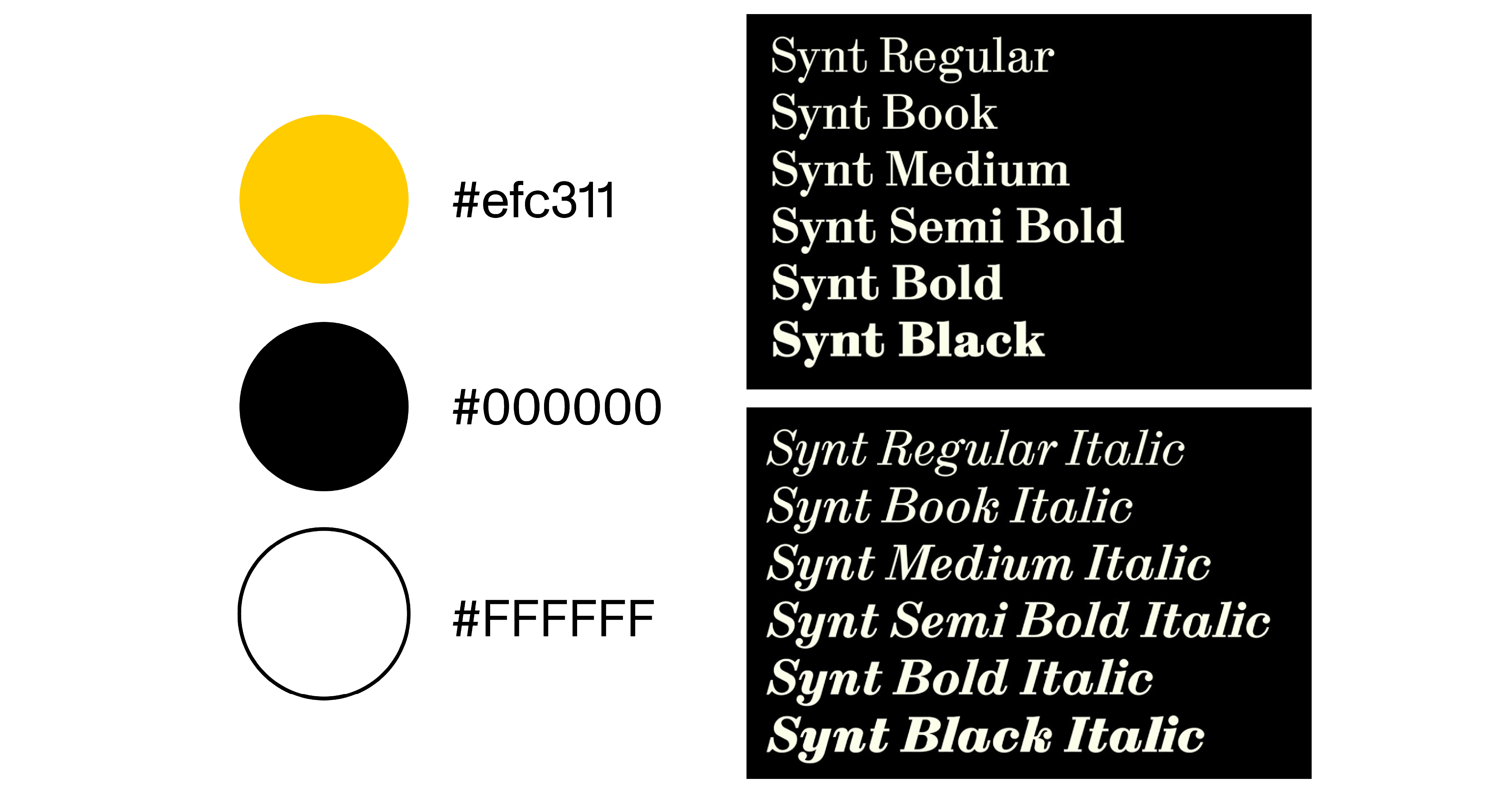
The brand book codifies Ghost's visual identity into a practical toolkit. Typography centers on Synt, a serif with character and adaptability, spanning multiple weights and italics to support everything from bold headlines to nuanced editorial applications. The color palette — black for sophistication, white for clarity, and yellow for impact — grounds the brand in both authority and playfulness. Together, these choices create a system that is rigorous yet expressive, reflecting Ghost's dual nature as a strategic partner and a creative disruptor.
The website applies the Ghost identity in a clean, cinematic framework. The dark background acts as a stage, letting the logo and project imagery command attention. Typography and layout follow the brand book, ensuring cohesion between digital presence and printed collateral. The site demonstrates how Ghost adapts to different client industries — lifestyle, auto, beauty, food & drink, sports, fashion, and film — while always keeping a consistent tone of voice and aesthetic.
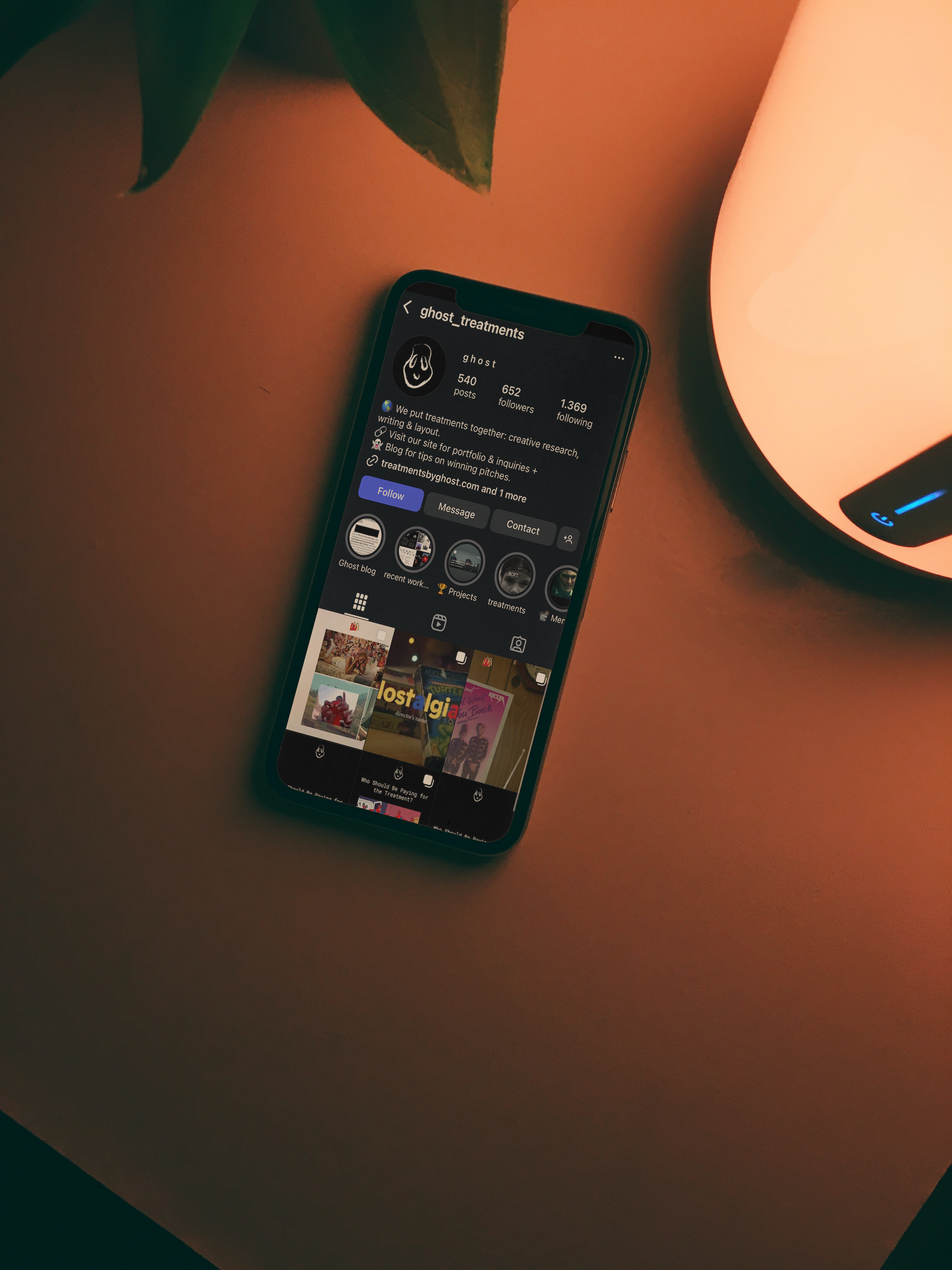
Ghost's social media avatar is represented by the hand-drawn logo featuring the friendly face of a ghost. This ensures brand cohesiveness across platforms, keeping the brand instantly recognisable.
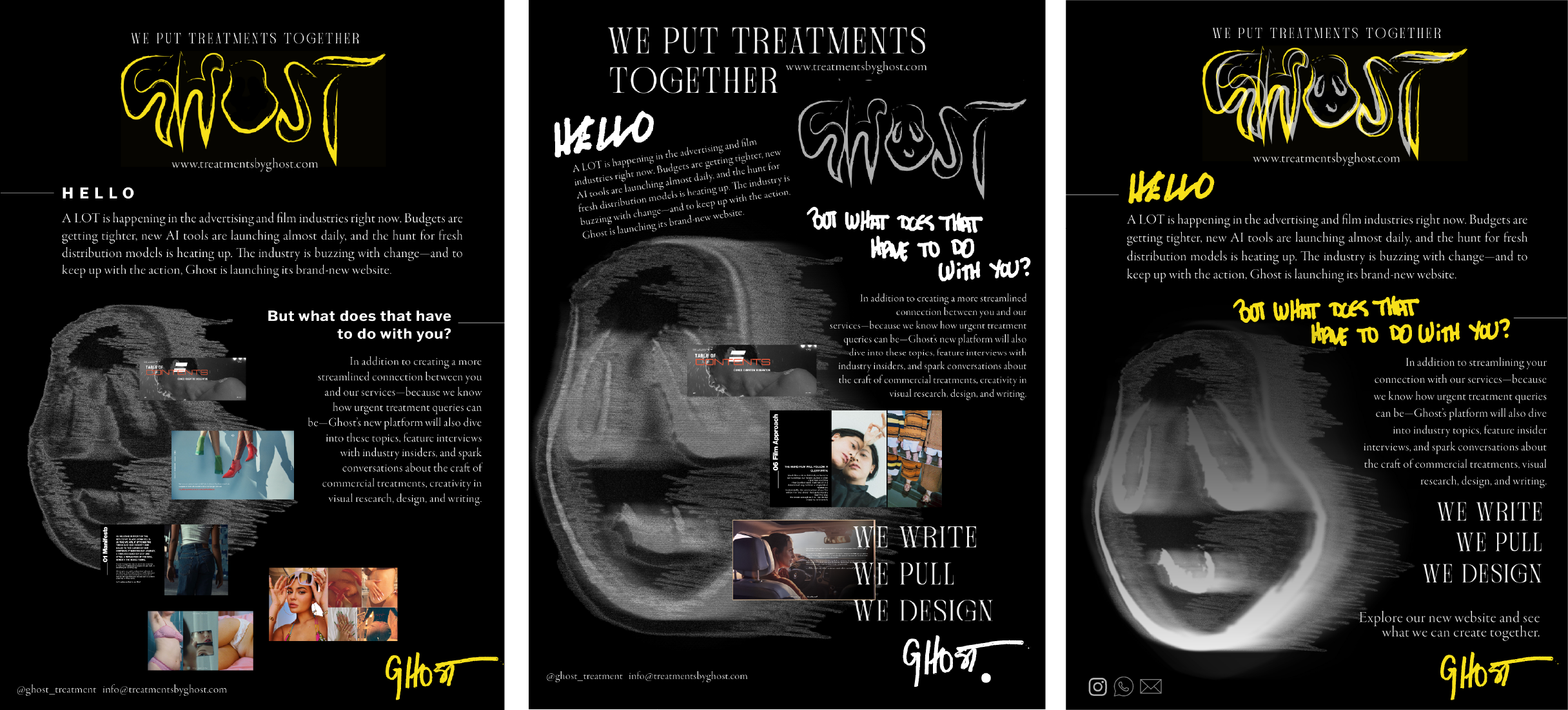
The newsletter translates Ghost's identity into direct communication with clients and collaborators. Its design emphasizes bold imagery, handwritten accents, and a layered collage aesthetic — echoing Ghost's hands-on approach. Each edition highlights not only new projects but also reflections on industry shifts, blending strategy and storytelling. The newsletter is both a marketing tool and a creative artifact, reinforcing Ghost's identity as a brand that values depth over decoration.
The blog extends Ghost's editorial voice, documenting insights into the world of treatments and beyond. Clean layouts and bold type treatments frame in-depth writing that explores process, industry trends, and creative philosophy.
The rebranding for Menina Moça sought to capture the layered essence of a place where music, literature, and human connection meet.
The challenge was giving it visual coherence without sacrificing its charm, grit, or improvisational energy.
The result is a handcrafted visual identity system rooted in analogue processes, music notation, and fragmented typography. Equal parts collage and composition, the brand expresses the essence of Menina Moça: a space of improvisation, intellect, and immersive beauty.
Deliverables included:
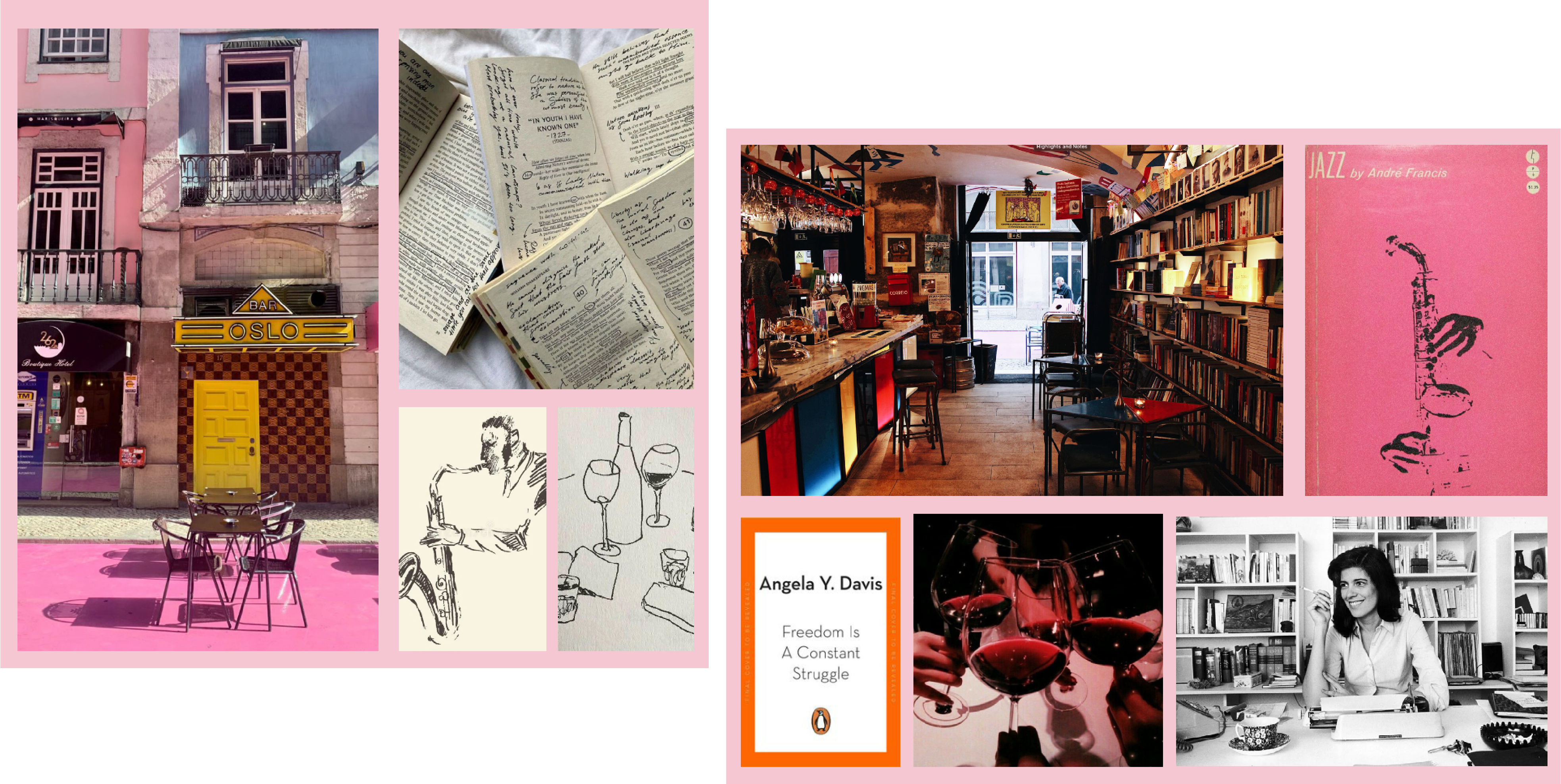
The moodboard for Menina Moça reflects the layered, tactile soul of the brand. A harmony of literary intimacy, jazz rhythm, and urban softness, blending Lisbon's Pink Street atmosphere with analog textures and cultural references: scribbled book pages, moody lighting, and expressive linework evoke the brand's voice.
Rather than polishing away its rawness, the identity embraces the handcrafted imperfection of offbeat rhythms, cut-and-paste textures, and imperfect letterforms, emulating the improvisational spirit of jazz. The system is intentionally expressive, yet structured enough to allow consistent application.
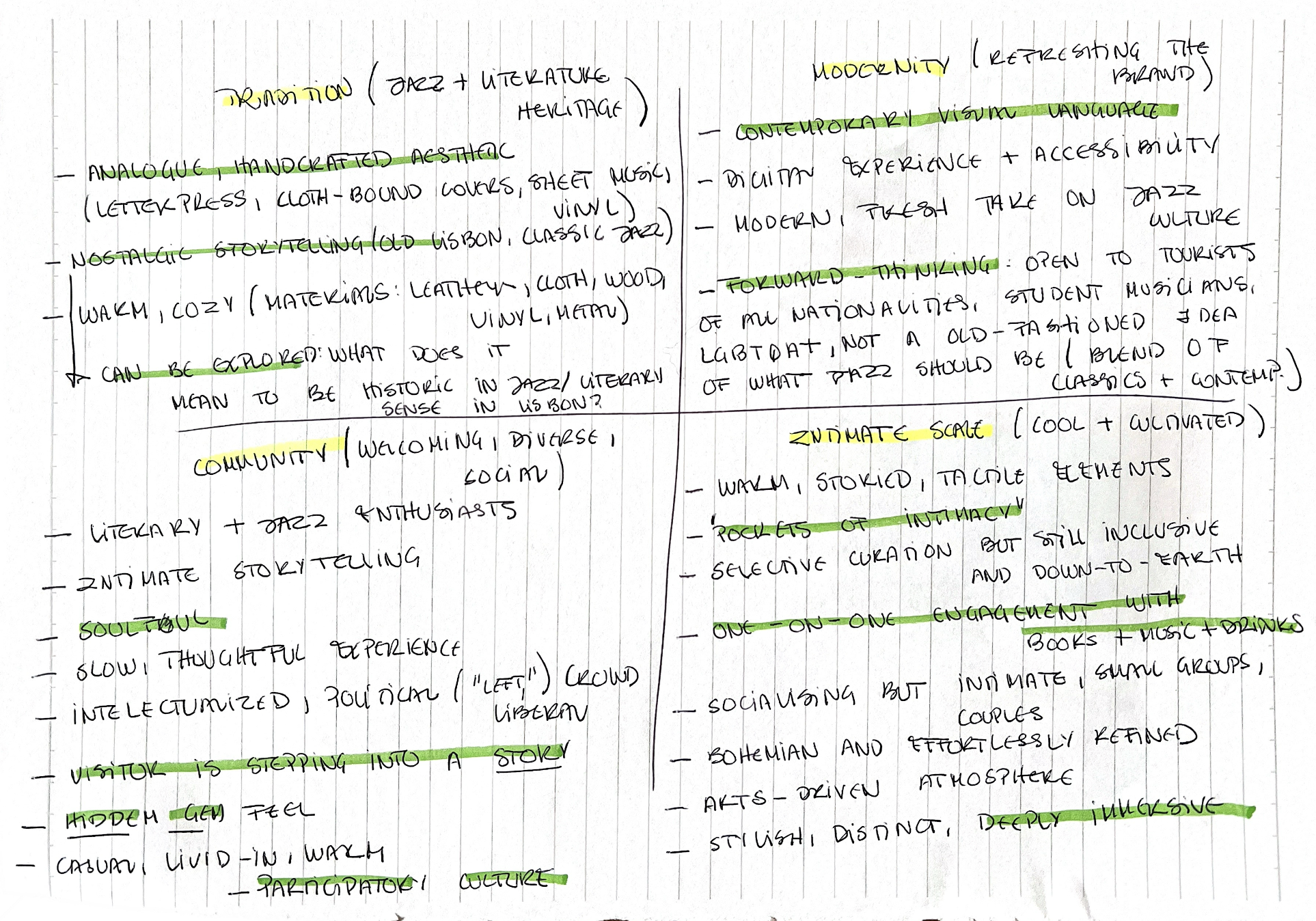
To define the soul of Menina Moça, we used a Tension Mapping method — a tool that helps clarify what makes a brand unique by identifying the contrasts it holds in balance.
This exploration led us to define four keywords that capture the brand's essence, shaping every visual, textual, and strategic choice that followed:
Authenticity
Contemporary
Soulful
Immersion
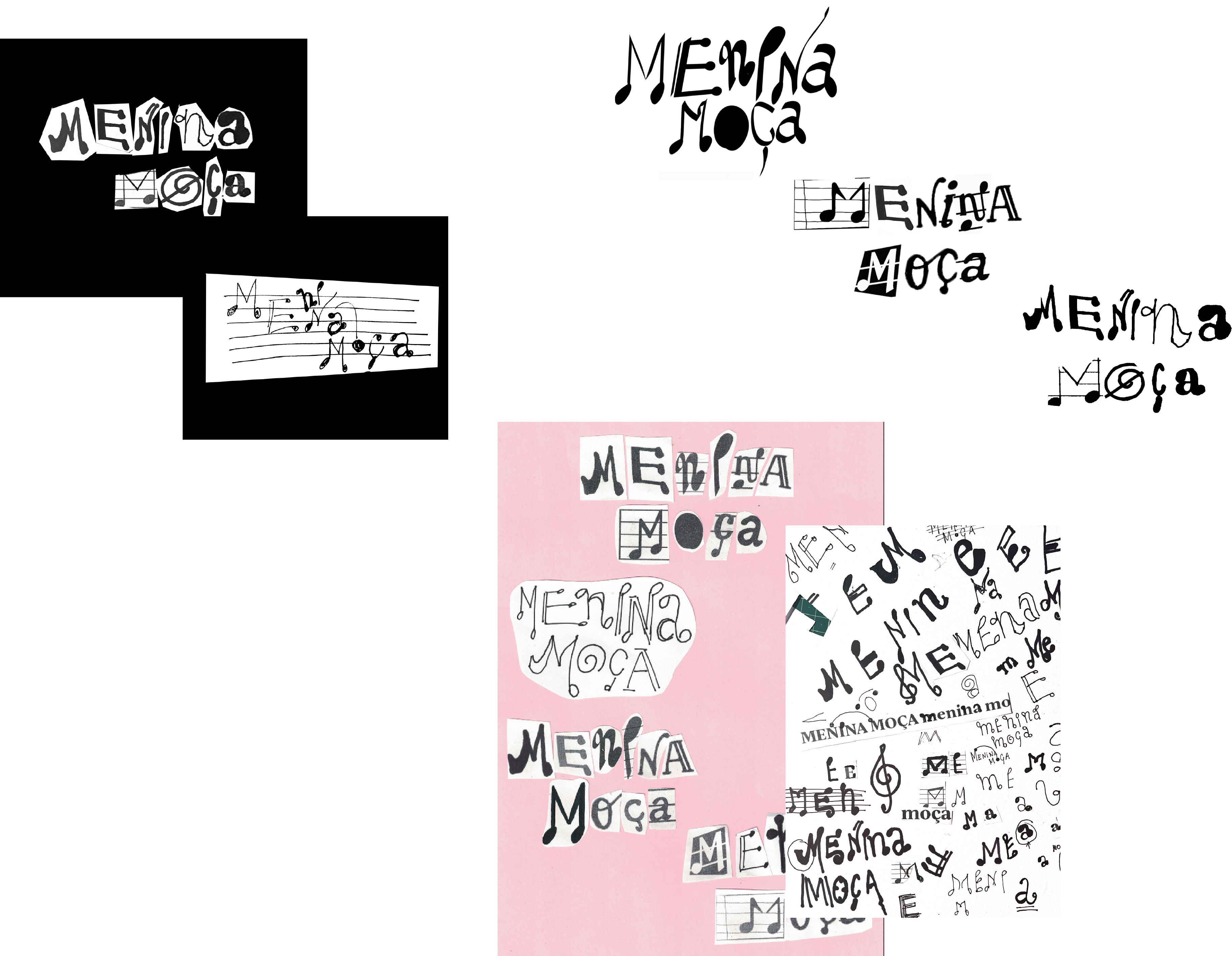
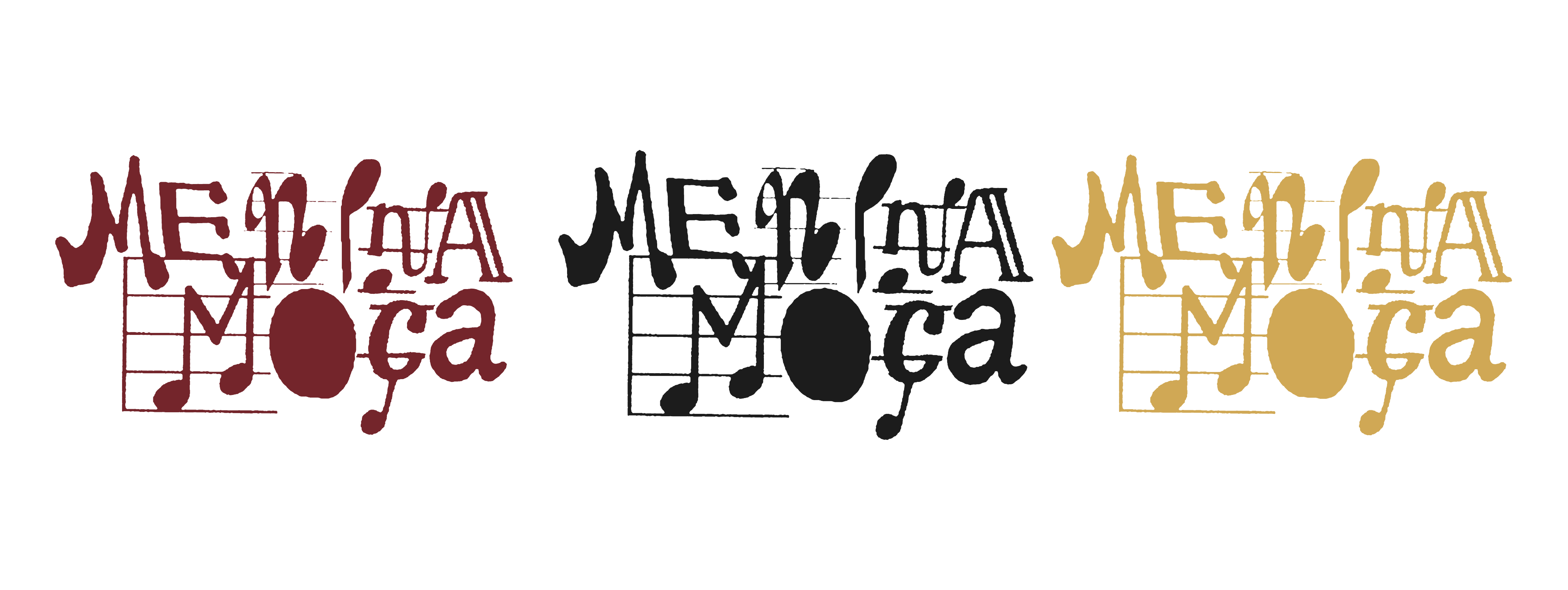
The logo for Menina Moça was built on a question: what happens when you fuse the structure of music notation with the expressive quirks of typography?
Before putting pencil to paper, we grounded the design in a multi-layered research phase. This wasn't just about understanding Menina Moça's brand personality, but exploring the cultural intersections that define the space: Portuguese and queer literature, jazz improvisation, and the visual cues tied to each of these worlds.
The result was a concept that aimed to melt letterforms with musical notation, without losing readability or becoming overly abstract.
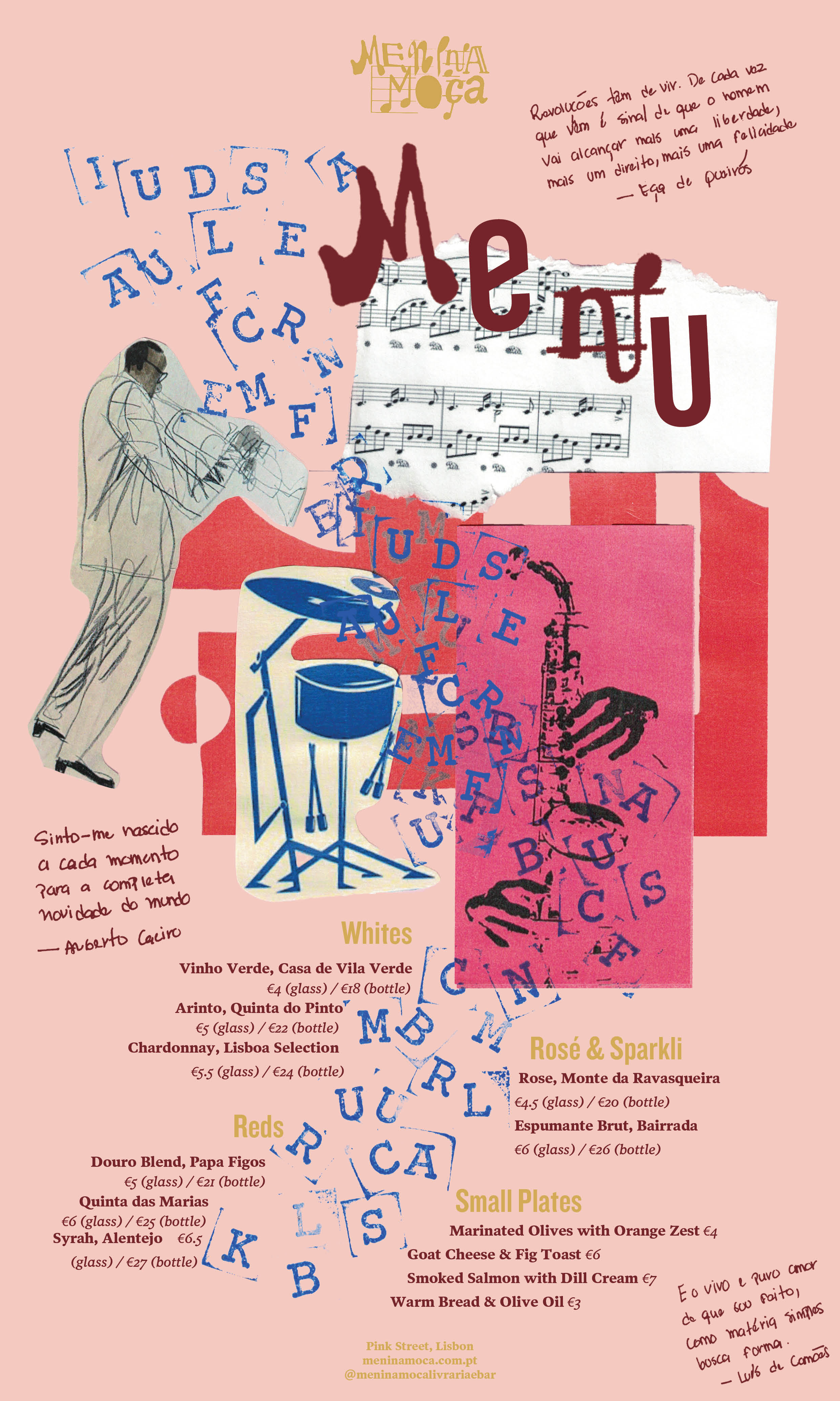
The menu design aimed to be playful and colourful, while remaining clear and easy to read. It was conceived to feel as though poets had left handwritten notes and small poems along the edges, gently easing guests in and immersing them in the culture of the space from one of its primary entry points.
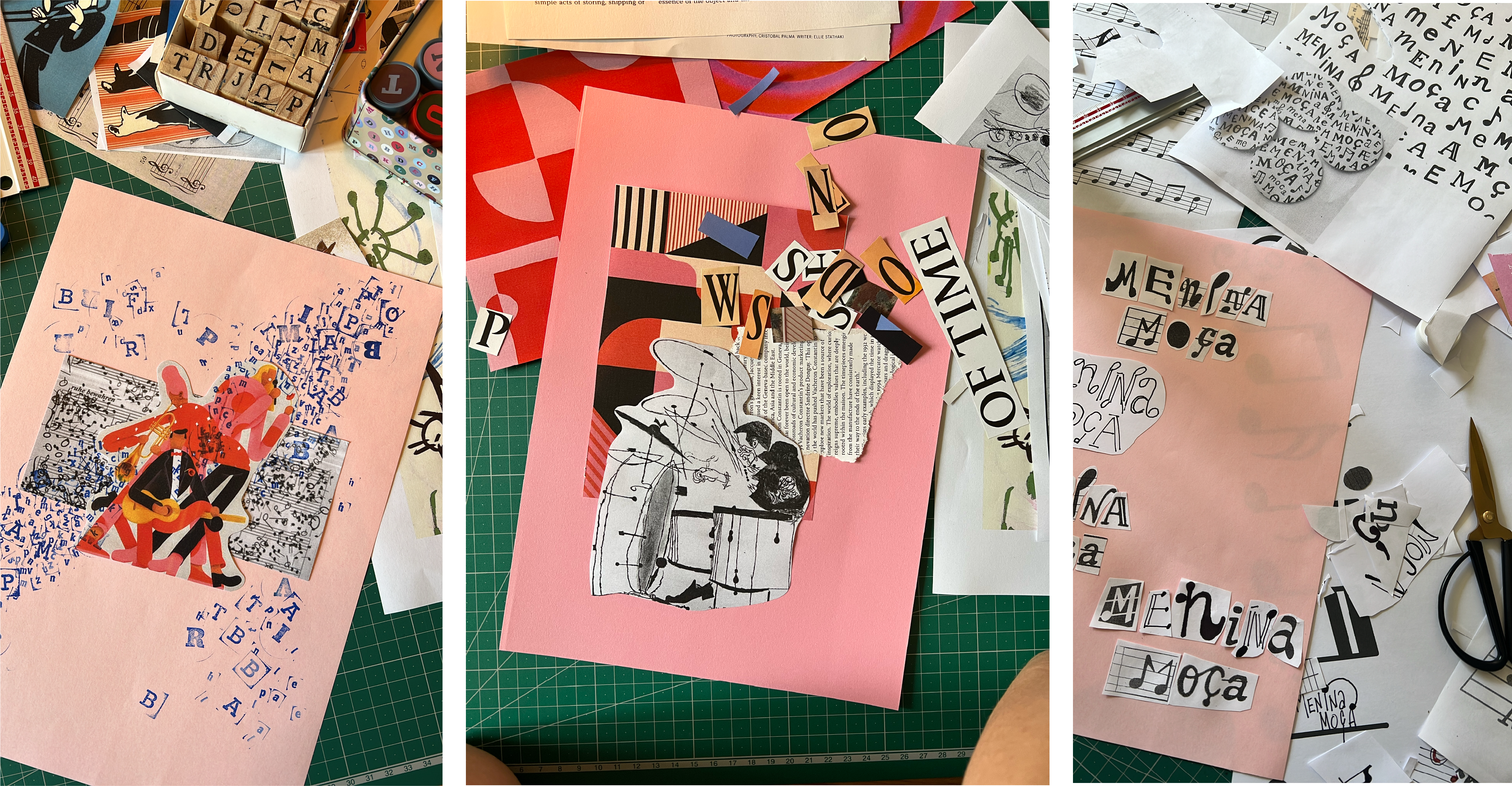
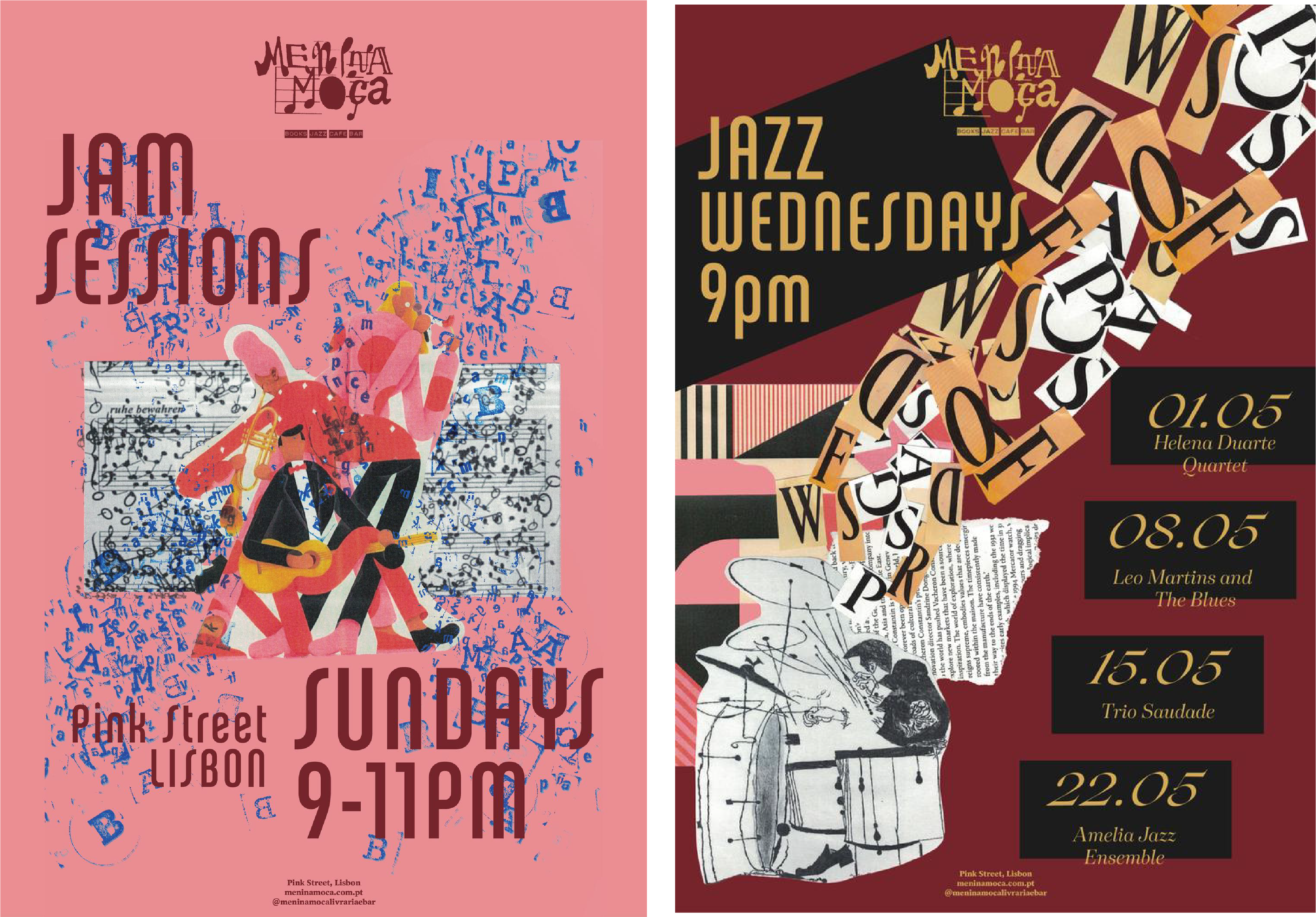
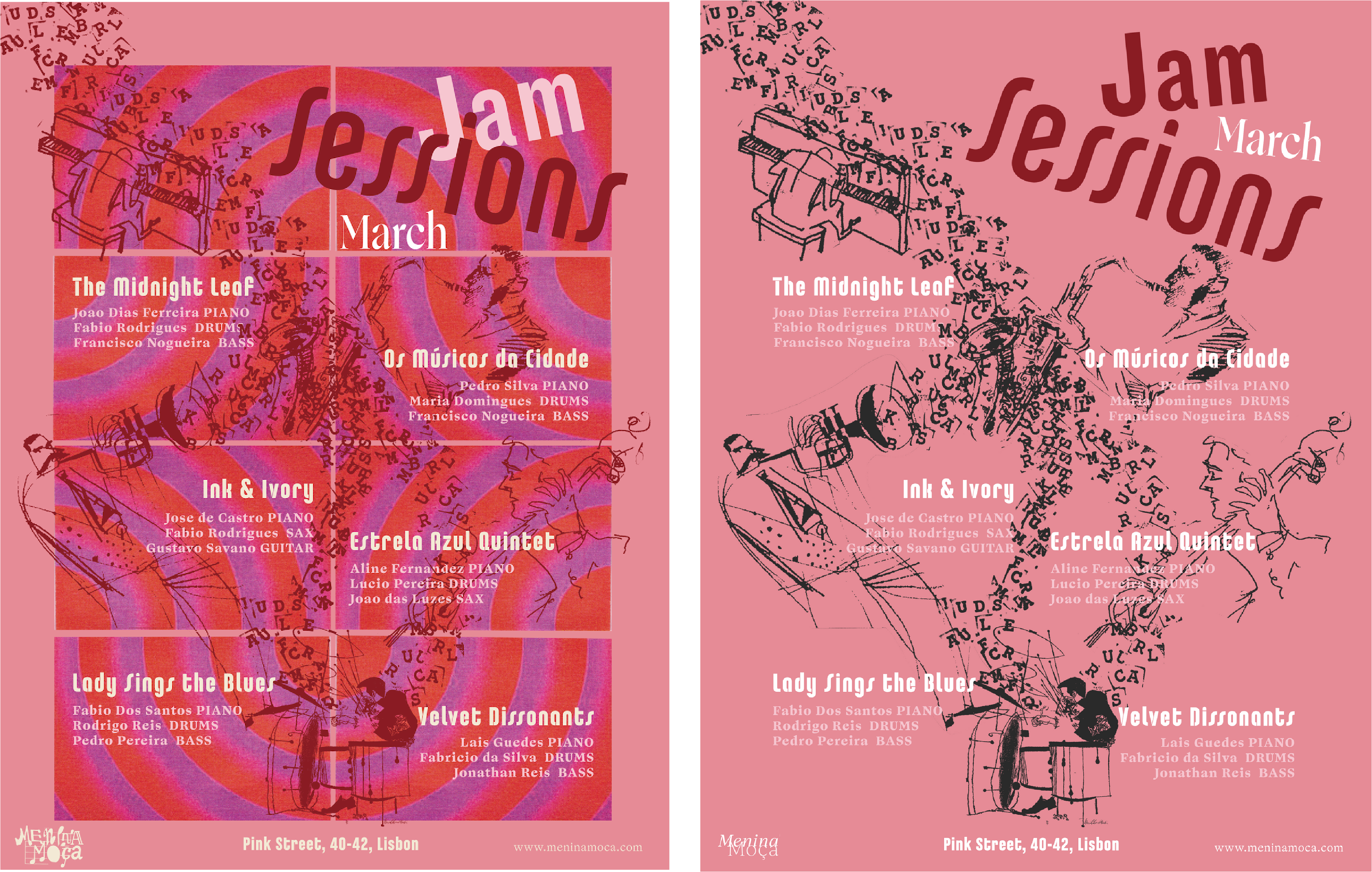
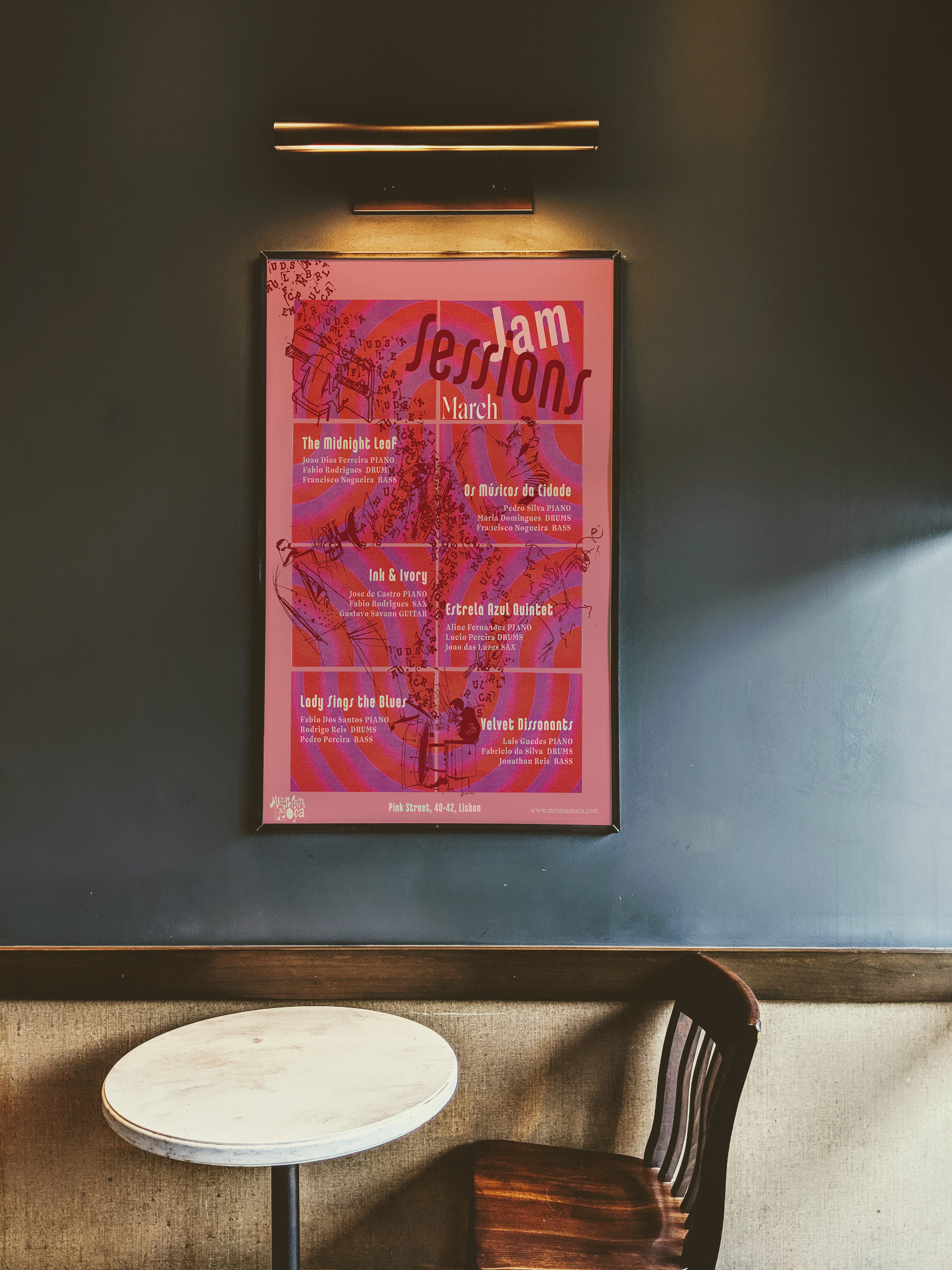
Set on Lisbon's famous Pink Street, it felt only natural that the colour palette of the posters should reflect the vividness and joyfulness of the street itself. The posters were conceived almost as if they might pop out from the walls of Lisbon, created through a mix of analogue approaches such as stamping, sketching, and collage to convey the artistic energy of the space.
The merchandise needed to remain true to the crowd, where you are likely to find a mix of book lovers, musicians, tourists, and wanderers, all sharing one thing in common: an openness to crafted design and a playful aesthetic. As the space is part wine bar and part bookshop, it was important to create objects that reflected this segment of the target audience, through notebooks, tote bags, pencils, and bookmarks.
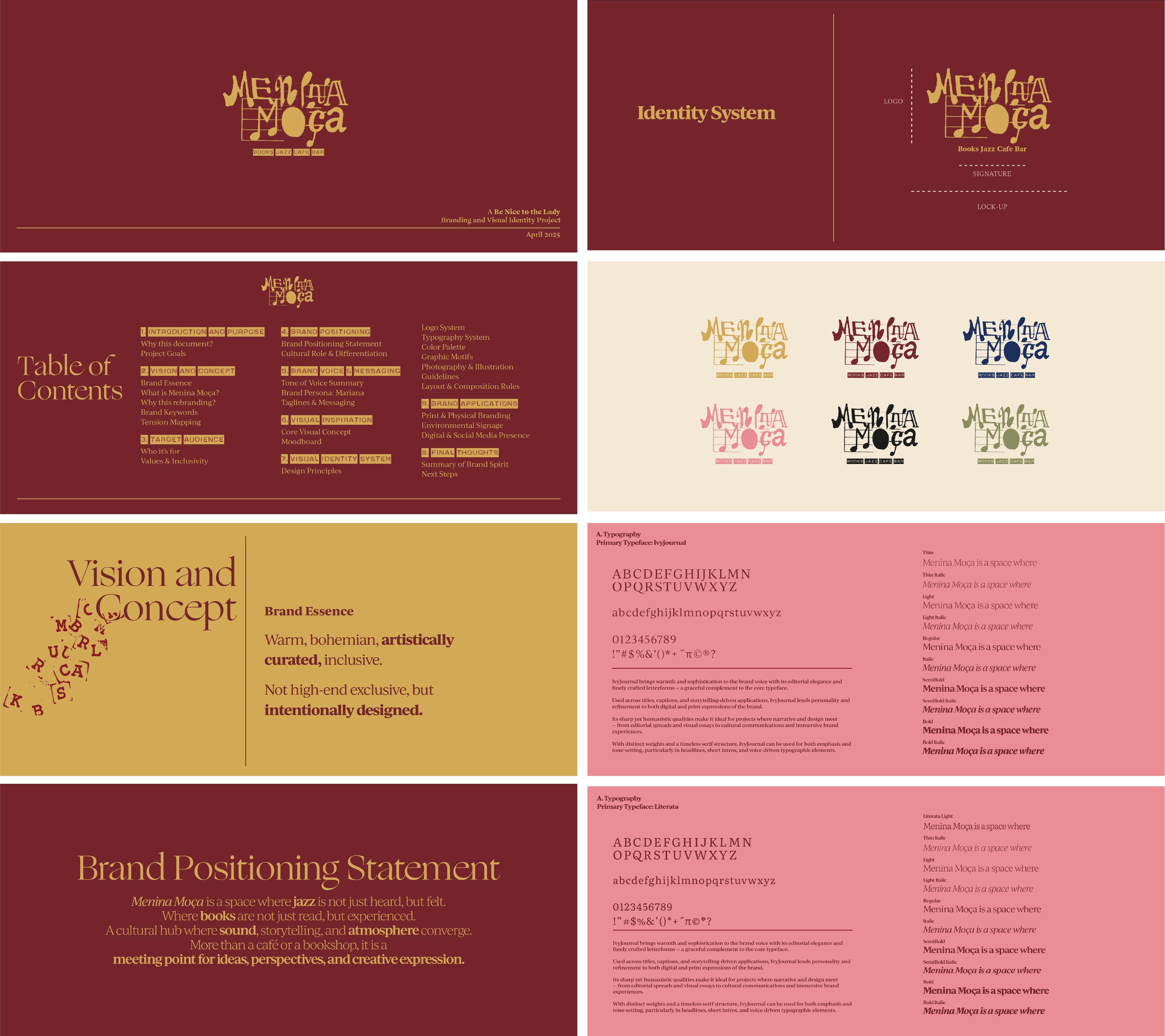
The branding book was created as a practical tool to ensure the identity could be applied consistently over time. It details the logo system, typography, colour usage, and brand applications, providing clear guidance for both print and digital use. Designed to be inviting and easy to navigate, the book reflects the brand's colour palette and typographic character, avoiding the feel of a rigid technical manual.